
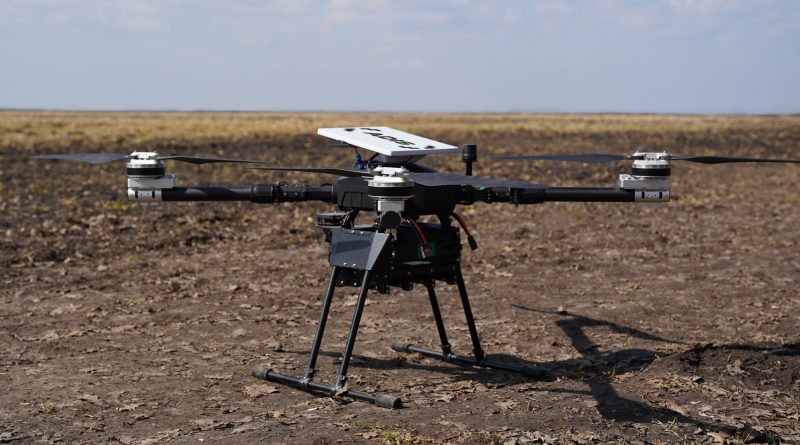
Ukraine Develops Heavy Drone ‘Adis’ with 50km Range and Satellite Communication Capabilities
Ukrainian defense engineers have unveiled a new heavy unmanned aerial vehicle named Adis, featuring an impressive operational range of up to 50 kilometers and advanced satellite communication systems. The drone has been named in honor of a fallen soldier from the 72nd Mechanized Brigade, continuing Ukraine’s tradition of commemorating its defenders through military technology designations. This latest development represents another significant step in Ukraine’s rapidly evolving domestic drone production capabilities, which have become crucial to the country’s defense strategy since the full-scale Russian invasion began in February 2022.
The Adis drone represents a new class of heavy unmanned systems designed to operate at extended ranges while maintaining reliable communication links through satellite connectivity. This satellite-based communication system addresses one of the most significant challenges faced by drone operators in modern warfare: electronic warfare and signal jamming. Traditional radio-controlled drones often become vulnerable when enemy forces deploy electronic countermeasures, but satellite links provide a more resilient connection that is harder to disrupt. The 50-kilometer operational range allows Ukrainian forces to strike deep behind enemy lines while keeping operators at a safe distance from frontline dangers.
Ukraine’s drone development program has accelerated dramatically since the beginning of the full-scale conflict. What started as a grassroots effort by volunteers and small tech companies has evolved into a sophisticated industrial ecosystem producing thousands of unmanned systems monthly. The country has become a global leader in combat drone innovation, with Ukrainian engineers developing solutions specifically tailored to the realities of modern mechanized warfare. From small FPV kamikaze drones costing a few hundred dollars to heavy strike platforms like Adis, Ukrainian manufacturers have demonstrated remarkable adaptability and technical prowess under wartime conditions.
The 72nd Mechanized Brigade, whose fallen soldier inspired the drone’s name, has been one of the most active Ukrainian units throughout the conflict. The brigade has participated in numerous critical operations and has become known for its effective integration of drone technology into combined arms tactics. Naming military equipment after fallen heroes has become a meaningful practice in Ukraine, serving both as a tribute to those who made the ultimate sacrifice and as a morale boost for troops who operate these systems. Each flight of the Adis drone now carries symbolic significance alongside its tactical mission.
Heavy drones like Adis fill a critical gap between small tactical quadcopters and larger fixed-wing systems. They can carry substantial payloads, including reconnaissance equipment, electronic warfare systems, or munitions, while remaining mobile enough for rapid deployment. The satellite communication capability is particularly valuable for operations in contested electromagnetic environments, where Russian forces have deployed extensive jamming systems designed to neutralize Ukrainian drone operations. Military analysts note that this cat-and-mouse game between drone developers and electronic warfare specialists has driven rapid innovation on both sides of the conflict.
International observers have closely watched Ukraine’s drone development as a preview of future warfare trends. The conflict has demonstrated that relatively inexpensive unmanned systems can have devastating effects against traditional military equipment worth millions of dollars. Tanks, artillery positions, and supply convoys have all proven vulnerable to drone attacks, fundamentally changing how military planners approach battlefield tactics. Ukraine’s experience has prompted NATO countries and other military powers to reassess their own drone capabilities and air defense systems. The Adis drone, with its combination of range, payload capacity, and communication resilience, represents the continued evolution of this transformative military technology.
Looking ahead, Ukrainian defense officials have indicated that domestic drone production will remain a top priority, with plans to further expand manufacturing capacity and develop even more advanced systems. The country aims to reduce its dependence on foreign military aid by building a self-sufficient defense industrial base capable of meeting frontline demands. Programs like Adis demonstrate that Ukraine possesses both the technical expertise and the manufacturing capability to develop sophisticated military systems despite the enormous challenges of wartime production. As the conflict continues, innovations like the Adis heavy drone will likely play an increasingly important role in shaping the battlefield dynamics.