
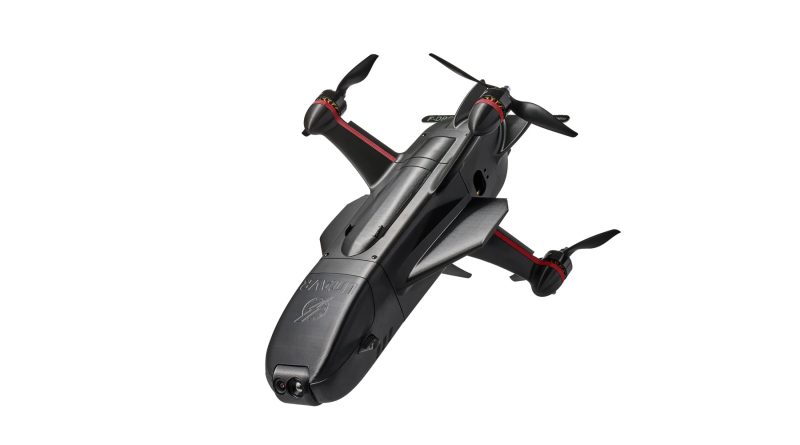
F-Drones Unveils Litavr: Autonomous Interceptor Drone with 65-Kilometer Range Revolutionizes Counter-UAS Defense
Ukrainian defense technology company F-Drones has introduced its latest innovation in counter-unmanned aerial systems warfare: the Litavr autonomous interceptor drone. This cutting-edge system represents a significant advancement in defensive drone technology, capable of autonomously engaging hostile unmanned aerial vehicles at distances of up to 65 kilometers. The system operates by receiving target coordinates directly from radar installations, after which the Litavr drone launches independently to intercept incoming threats without requiring constant human piloting.
The development of the Litavr comes at a critical juncture in modern warfare, where drones have fundamentally transformed battlefield dynamics. Since the outbreak of the conflict in Ukraine in 2022, both sides have deployed thousands of unmanned aerial vehicles for reconnaissance, artillery spotting, and direct attacks. The proliferation of relatively inexpensive attack drones, including Iranian-designed Shahed loitering munitions, has created an urgent need for cost-effective counter-drone solutions. Traditional air defense systems, designed to intercept manned aircraft and missiles, often prove economically impractical when used against small, cheap drones that may cost only a fraction of the intercepting missile.
The Litavr system addresses this asymmetry by offering an autonomous drone-versus-drone solution. According to F-Drones, the interceptor integrates seamlessly with existing radar networks, automatically processing target data and calculating optimal intercept trajectories. This level of automation significantly reduces the response time between threat detection and neutralization, a critical factor when defending against fast-moving or swarming drone attacks. The 65-kilometer operational range allows defensive forces to engage hostile drones well before they reach their intended targets, providing a crucial buffer zone for protected assets and civilian infrastructure.
The technical specifications of the Litavr reflect lessons learned from nearly three years of intensive drone warfare. Modern interceptor drones must balance speed, maneuverability, and payload capacity while maintaining the autonomous capabilities necessary for independent operation. Industry experts note that the challenge of creating effective counter-UAS systems lies not only in the hardware but also in the sophisticated software required for target identification, tracking, and engagement in complex electromagnetic environments where GPS signals may be jammed and communications disrupted.
F-Drones joins a growing ecosystem of Ukrainian defense startups that have emerged as global leaders in drone technology innovation. The country’s defense tech sector has experienced explosive growth since 2022, with dozens of companies developing everything from first-person-view kamikaze drones to sophisticated electronic warfare systems. This surge in innovation has been driven by both necessity and significant government investment, with Ukraine allocating substantial resources to domestic drone production. The Ukrainian government has announced plans to manufacture over one million drones in the coming year, reflecting the central role these systems now play in modern military operations.
The autonomous nature of systems like the Litavr raises important questions about the future of air defense and the role of human operators in combat decisions. While fully autonomous weapons systems remain controversial under international humanitarian law, defensive interceptors that target other machines rather than humans occupy a different ethical space. Military analysts suggest that the increasing speed and complexity of drone swarm attacks may eventually necessitate autonomous defensive responses, as human reaction times become insufficient to counter multiple simultaneous threats. The Litavr appears designed with this future in mind, capable of operating independently while still functioning within a human-supervised command structure.
The introduction of the Litavr also highlights the ongoing technological competition in counter-drone warfare. Nations worldwide are investing heavily in C-UAS capabilities, employing diverse approaches including directed energy weapons, electronic jamming systems, trained eagles, net-capturing drones, and kinetic interceptors. The Ukrainian experience has become a proving ground for these technologies, with successful systems quickly attracting international attention and potential export orders. For F-Drones, the Litavr represents not only a solution to immediate battlefield needs but also a potential entry into the growing global market for counter-drone defense systems, estimated to reach tens of billions of dollars in the coming decade.