
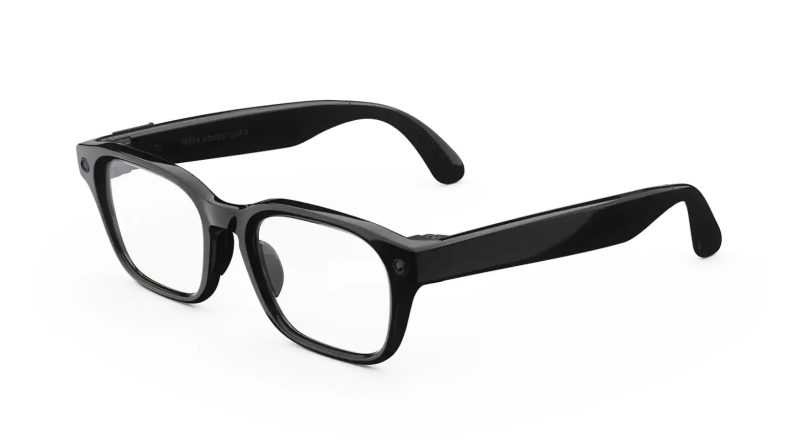
Meta разрабатывает смарт-очки, фиксирующие все, что видит и слышит пользователь
{"title":"Meta Developing Smart Glasses That Record Everything Users See and Hear","content":"<p>Meta is reportedly working on an advanced version of its Ray-Ban smart glasses that would continuously record everything the wearer sees and hears throughout their day. According to sources familiar with the project, the technology giant aims to create a seamless life-logging device that captures audio and video without requiring the user to actively initiate recording, raising significant concerns about privacy and consent for those who may unknowingly become subjects of this perpetual surveillance.</p><p>The development marks a significant evolution from Meta's current Ray-Ban Stories glasses, which already feature cameras and microphones but require users to manually trigger recording sessions. The new iteration would fundamentally change this dynamic by operating in an always-on mode, storing vast amounts of personal and environmental data that could then be processed by artificial intelligence systems. This approach aligns with Meta CEO Mark Zuckerberg's broader vision of integrating AI assistants into wearable technology, creating devices that understand context and can provide proactive assistance based on what users experience throughout their daily lives.</p><p>Privacy advocates have expressed serious concerns about the implications of such technology becoming mainstream. Unlike smartphones, which are typically held visibly when recording, smart glasses that look identical to regular eyewear make it nearly impossible for bystanders to know when they are being filmed or recorded. This creates what experts call an "asymmetric privacy environment" where one party possesses complete awareness of the recording while others remain entirely unaware. Legal frameworks in many jurisdictions require consent for recording conversations, but enforcement becomes practically impossible when recording devices are indistinguishable from ordinary accessories.</p><p>The history of wearable recording technology has been fraught with controversy. Google Glass, introduced in 2013, faced immediate backlash and was banned from numerous establishments including bars, restaurants, and movie theaters. The term "Glassholes" emerged to describe early adopters who made others uncomfortable with their potentially recording eyewear. Google eventually pivoted the product toward enterprise applications before discontinuing it entirely in 2023. Meta appears to be betting that a decade of smartphone cameras and social media sharing has normalized constant documentation of daily life enough to make such technology more palatable to the general public.</p><p>The technical challenges of creating such a device are substantial. Continuous video recording requires enormous amounts of storage and battery power, two resources that are severely constrained in eyewear form factors. Meta would need to achieve significant breakthroughs in data compression, local processing, and battery efficiency to make always-on recording practical. Industry analysts suggest the company may employ edge AI processing to selectively store only "important" moments, though this raises additional questions about who defines importance and what happens to data that is captured but deemed unimportant.</p><p>Meta's push into this territory comes as the company faces increasing competition in the augmented reality and smart wearable space. Apple has introduced its Vision Pro headset, while companies like Snap continue developing their Spectacles line. However, Meta's approach differs significantly by prioritizing lightweight, socially acceptable form factors over immersive mixed reality experiences. The company shipped over one million Ray-Ban Meta glasses in 2024, demonstrating meaningful consumer appetite for smart eyewear that doesn't draw attention to itself.</p><p>Regulatory responses to such technology remain uncertain. The European Union's General Data Protection Regulation provides some protections, requiring explicit consent for recording in many circumstances, but enforcement mechanisms were not designed with invisible recording devices in mind. In the United States, a patchwork of state laws governs recording consent, with some states requiring all-party consent while others permit single-party recording. Legal experts suggest that widespread adoption of always-on recording glasses could force legislative updates, though technology historically outpaces regulatory frameworks by years or even decades.</p><p>As Meta continues developing this technology, the company will need to address growing public concerns about surveillance capitalism and data collection. The glasses would generate unprecedented amounts of first-person perspective data that could be invaluable for training AI systems, raising questions about data ownership and usage rights. Whether consumers ultimately embrace or reject such intimate recording capabilities may depend largely on how Meta addresses transparency, consent mechanisms, and data protection in the final product design.</p>}