
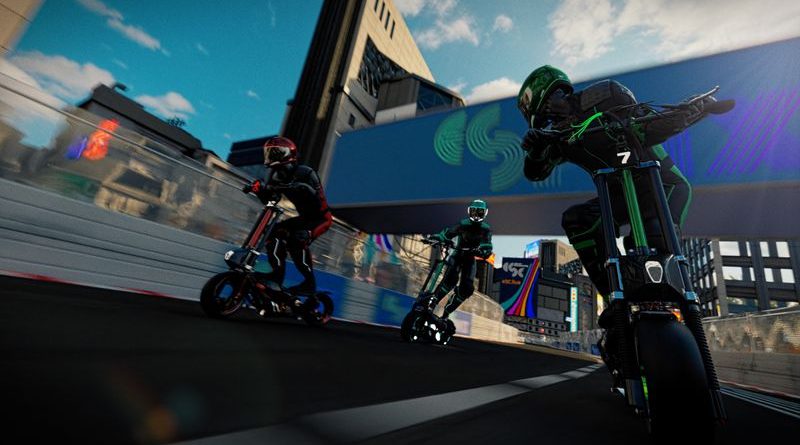
A New Era of Racing: Formula 1 Driver Takes the Wheel of an Electric Scooter in Revolutionary Championship
The world of motorsport is about to witness an unprecedented transformation as electric scooters make their way onto professional racing circuits. In a groundbreaking development that bridges the gap between urban mobility and competitive racing, a Formula 1 driver has been spotted testing an electric scooter designed specifically for a new racing series. This innovative championship, scheduled to launch in 2021, promises to bring high-speed competition to the streets of major cities worldwide, with vehicles capable of reaching speeds up to 100 kilometers per hour.
The upcoming electric scooter racing series represents a significant departure from traditional motorsport formats. Unlike conventional racing that takes place on purpose-built circuits far from city centers, these competitions will utilize existing urban infrastructure, transforming familiar streets into thrilling racetracks. The decision to integrate racing into metropolitan environments reflects a growing trend in motorsport to bring action closer to fans while promoting sustainable transportation alternatives. Cities across Europe, Asia, and the Americas are reportedly in discussions to host rounds of this innovative championship.
The involvement of a Formula 1 driver in this project lends considerable credibility to what might otherwise be dismissed as a novelty venture. Professional racing drivers bring invaluable expertise in vehicle dynamics, racing strategy, and safety protocols that will be essential in developing this new discipline. Their participation also signals to sponsors and broadcasters that electric scooter racing has genuine competitive potential. The crossover between established motorsport categories and emerging electric mobility competitions has become increasingly common, with many drivers exploring opportunities in Formula E and other sustainable racing series.
Electric scooters have experienced explosive growth in urban transportation over the past five years. What began as a convenient last-mile solution has evolved into a sophisticated mobility ecosystem worth billions of dollars globally. Companies like Lime, Bird, and Tier have deployed millions of shared scooters in cities worldwide, fundamentally changing how people navigate urban environments. The transition from casual urban transport to competitive racing represents the natural evolution of this technology, pushing manufacturers to develop more powerful, durable, and aerodynamic designs that could eventually trickle down to consumer products.
The technical specifications of racing-grade electric scooters differ dramatically from their street-legal counterparts. While typical rental scooters are limited to speeds of 25-30 kilometers per hour for safety reasons, competition vehicles feature enhanced battery systems, upgraded motors, and reinforced frames capable of withstanding the rigors of wheel-to-wheel racing. The 100 km/h top speed announced for the championship places these machines firmly in the territory of serious motorsport, requiring riders to possess exceptional skill, reflexes, and physical conditioning. Safety equipment including full racing suits, helmets, and protective barriers will be mandatory.
The environmental implications of electric scooter racing align with broader shifts in the motorsport industry toward sustainability. Formula E has demonstrated that electric racing can generate genuine excitement while promoting zero-emission technology, and this new scooter series aims to take that message even further by focusing on vehicles accessible to ordinary consumers. The championship organizers hope that showcasing the performance potential of electric scooters will accelerate public acceptance of micromobility solutions and contribute to reducing urban air pollution and traffic congestion.
As the 2021 launch date approaches, anticipation continues to build among motorsport enthusiasts and urban mobility advocates alike. The combination of familiar city landscapes, cutting-edge electric technology, and professional racing talent creates a unique spectacle that could attract entirely new audiences to competitive racing. Whether this innovative format becomes a lasting fixture in the motorsport calendar or remains an experimental curiosity will depend largely on its ability to deliver compelling entertainment while maintaining rigorous safety standards. One thing is certain: the boundaries of what constitutes legitimate racing continue to expand in fascinating and unexpected directions.