
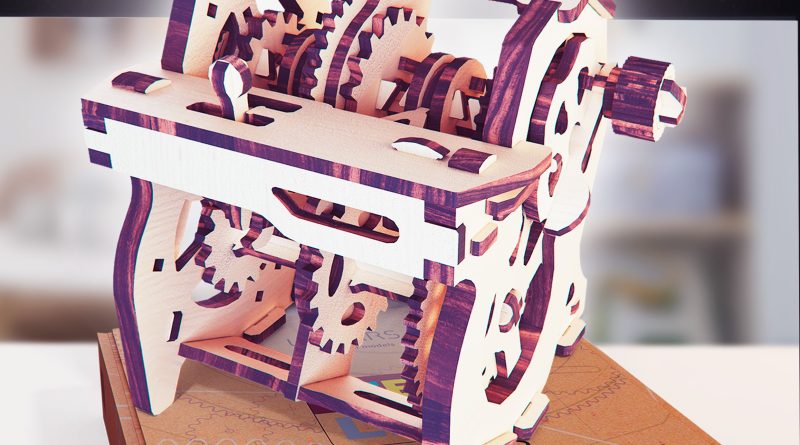
UGears Launches Educational STEM Project Featuring Augmented Reality Technology
Ukrainian mechanical puzzle manufacturer UGears has unveiled an innovative educational initiative that combines their signature wooden construction kits with cutting-edge augmented reality technology. The UGears STEM project represents a significant step forward in hands-on learning, merging traditional craftsmanship with digital innovation to create an immersive educational experience for students and hobbyists alike. The company, known worldwide for its intricate self-propelled mechanical models, is now positioning itself at the forefront of educational technology by integrating AR capabilities into their product line.
The newly launched project currently encompasses four mechanical puzzle models, each designed to teach fundamental principles of physics, engineering, and mechanics. However, UGears has announced ambitious expansion plans, with the company intending to grow the AR-enabled collection to include 30 models in the near future. This expansion reflects the growing demand for interactive STEM education tools that can engage students beyond traditional classroom methods. Each model in the collection serves as both a challenging construction project and a gateway to deeper scientific understanding through the augmented reality component.
The integration of augmented reality into physical educational toys represents a broader trend in the STEM education sector. Research has consistently shown that students retain information more effectively when learning involves multiple sensory experiences and hands-on activities. By combining the tactile satisfaction of building a wooden mechanism with digital overlays that explain the underlying scientific principles, UGears is tapping into what educators call “blended learning” – an approach that has gained significant traction since the global shift toward hybrid education models. The AR features allow students to visualize concepts like gear ratios, mechanical advantage, and kinetic energy transfer in ways that static textbooks simply cannot achieve.
UGears was founded in Ukraine in 2014 and quickly gained international recognition for its unique approach to mechanical modeling. Unlike traditional model kits that require glue or specialized tools, UGears products feature precision-cut wooden components that snap together using the company’s proprietary joint system. The models are entirely self-propelled, powered by rubber bands and gravity rather than batteries or motors. This design philosophy aligns perfectly with STEM education goals, as it allows students to observe pure mechanical principles without the abstraction of electronic components. The company’s products have been sold in over 85 countries, building a dedicated community of enthusiasts who appreciate both the artistic beauty and engineering precision of the designs.
The timing of this educational initiative comes as schools and parents worldwide increasingly seek engaging ways to teach science and technology concepts. The global STEM toy market has experienced remarkable growth, with analysts projecting it to reach over $50 billion by 2028. This surge is driven by growing awareness of the importance of early STEM education and the desire to make learning more interactive and enjoyable. Companies that successfully bridge the gap between entertainment and education – sometimes called “edutainment” – are finding receptive audiences among both educational institutions and families looking to supplement traditional schooling.
The augmented reality component of the UGears STEM project works through a companion mobile application that users can download to their smartphones or tablets. When pointed at a completed model, the app overlays animated explanations, highlights individual components, and demonstrates the scientific principles at work within the mechanism. Users can access information about historical inventors, real-world applications of the mechanisms they’ve built, and challenges that encourage further exploration. This digital layer transforms what might be a one-time building experience into an ongoing educational resource that students can return to repeatedly as their understanding deepens.
Educational experts have praised the approach of combining physical construction with digital enhancement. Building with one’s hands develops fine motor skills, spatial reasoning, and patience – qualities that are increasingly valuable in an age of instant digital gratification. Meanwhile, the AR component ensures that the educational content remains current and can be updated without requiring new physical products. This hybrid model also addresses different learning styles, accommodating visual learners through the AR animations while satisfying kinesthetic learners through the assembly process. As UGears expands its STEM collection toward the planned 30 models, educators will have access to an increasingly comprehensive toolkit for teaching mechanical principles across various complexity levels and age groups.