
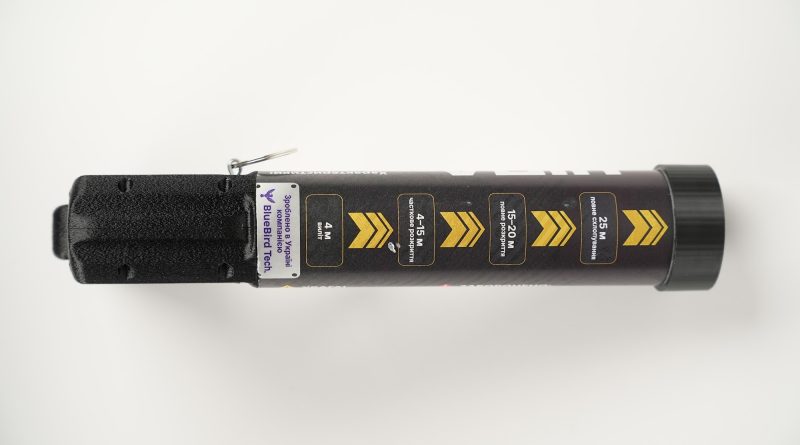
BlueBird Tech Launches Mass Production of ‘Chip’ Net Launchers with 25-Meter Range for FPV Drone Interception
Ukrainian defense technology company BlueBird Tech has announced the launch of mass production of its innovative ‘Chip’ net launcher system, designed specifically to intercept and neutralize enemy first-person view (FPV) drones. The company plans to manufacture over 500 net cartridges monthly, marking a significant step forward in Ukraine’s efforts to develop cost-effective counter-drone solutions amid the ongoing conflict. This development represents a growing trend in modern warfare where affordable, practical countermeasures are becoming increasingly vital against the proliferation of small unmanned aerial vehicles on the battlefield.
The ‘Chip’ net launcher boasts an impressive operational range of up to 25 meters, allowing operators to engage incoming FPV drones at a safe distance before they can reach their intended targets. The system works by deploying a specialized net that entangles the drone’s propellers and structure, causing it to lose control and fall to the ground without detonation. This non-explosive approach offers several advantages over traditional kinetic countermeasures, including reduced risk of collateral damage and the potential to capture enemy drones intact for intelligence purposes. The relatively simple mechanical design also ensures reliability in field conditions and minimal training requirements for operators.
The emergence of FPV drone warfare has fundamentally transformed modern combat operations, particularly evident in the Russia-Ukraine conflict. These small, inexpensive drones equipped with explosive payloads have proven devastatingly effective against armored vehicles, fortifications, and personnel. A single FPV drone costing a few hundred dollars can destroy military equipment worth millions, making them an asymmetric warfare tool of unprecedented efficiency. Both sides in the conflict have deployed tens of thousands of these devices, creating an urgent need for effective and economical countermeasures that can match the scale of the threat.
Traditional counter-drone systems, such as electronic warfare jammers and sophisticated radar-guided weapons, often prove too expensive or complex for widespread deployment across extended front lines. Electronic jamming systems can cost tens of thousands of dollars and require specialized operators, while missile-based solutions present an unfavorable cost-exchange ratio when targeting cheap commercial drones modified for military use. This economic reality has driven defense contractors worldwide to explore simpler, more affordable alternatives that can be mass-produced and distributed to infantry units at the tactical level.
BlueBird Tech’s decision to scale up production to 500 units monthly reflects the urgent demand for such solutions among Ukrainian military forces. The company has reportedly worked closely with front-line units to refine the ‘Chip’ system based on real combat feedback, ensuring that the final product meets the practical needs of soldiers in the field. The net launcher joins a growing ecosystem of Ukrainian-developed defense technologies that have emerged since 2022, demonstrating the country’s remarkable capacity for military innovation under wartime conditions. Local production also reduces dependence on foreign suppliers and ensures a more reliable supply chain for critical defensive equipment.
The physics behind net-based drone interception systems is elegantly simple yet highly effective. When deployed, the net rapidly expands to cover a wide area, significantly increasing the probability of successfully capturing a fast-moving drone. Modern nets used in these systems are often made from high-strength synthetic materials such as Dyneema or Kevlar, capable of withstanding the forces generated by spinning propellers while remaining lightweight enough for rapid deployment. Some advanced versions incorporate conductive threads that can short-circuit the drone’s electrical systems upon contact, providing an additional layer of neutralization capability.
Looking ahead, the proliferation of net-based counter-drone systems like the ‘Chip’ may influence how militaries worldwide approach the FPV drone threat. As these defensive technologies become more widespread and sophisticated, drone operators may need to develop new tactics, such as flying at higher altitudes or using decoys, to overcome net-based defenses. This ongoing cat-and-mouse dynamic between offensive and defensive drone technologies represents a new frontier in military innovation, with lessons from the Ukraine conflict likely to shape doctrine and procurement decisions for armed forces around the globe for years to come. BlueBird Tech’s successful mass production initiative positions Ukraine at the forefront of this rapidly evolving technological landscape.