
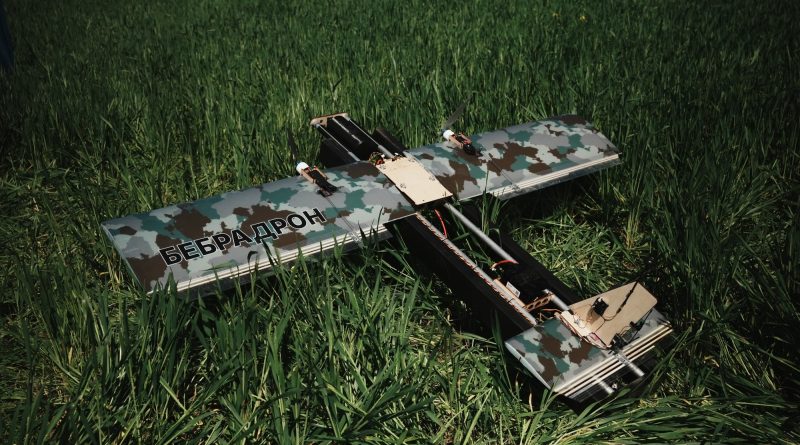
Ukrainian Bebradron UAV Receives Automatic Catapult Launch System and Upgraded Communications
The Ukrainian unmanned aerial vehicle known as “Bebradron” has undergone significant upgrades, receiving an automatic catapult launch system and an enhanced communications suite that promises to improve its operational capabilities on the battlefield. In its base configuration, this versatile drone is capable of delivering payloads weighing up to 7.5 kilograms, making it a valuable asset for various military applications including reconnaissance, supply delivery, and strike missions. These latest modifications represent another step forward in Ukraine’s rapidly evolving domestic drone industry, which has become a critical component of the nation’s defense strategy.
The introduction of an automatic catapult launch system marks a substantial improvement in the Bebradron’s deployment flexibility. Traditional drone launches often require extensive preparation, flat terrain, and sometimes even runways for larger fixed-wing platforms. The automated catapult eliminates many of these constraints, allowing operators to launch the aircraft from confined spaces, forested areas, or positions that would otherwise be unsuitable for drone operations. This capability is particularly valuable in active combat zones where ground forces need to maintain mobility and avoid detection by enemy reconnaissance assets.
The upgraded communications system addresses one of the most critical challenges facing modern military drones: maintaining reliable command and control links in contested electromagnetic environments. Russian electronic warfare capabilities have proven highly effective at disrupting Ukrainian drone operations, jamming control signals and GPS navigation. The new communications suite reportedly offers enhanced resistance to electronic interference, extended operational range, and more secure data transmission. These improvements could significantly increase the Bebradron’s survivability and effectiveness in environments saturated with electronic countermeasures.
Ukraine’s drone industry has experienced unprecedented growth since the beginning of the full-scale invasion in February 2022. What began as a reliance on imported commercial drones and modified civilian platforms has evolved into a sophisticated domestic manufacturing ecosystem. Ukrainian companies and volunteer organizations have developed dozens of indigenous drone designs, ranging from small first-person-view quadcopters used for precision strikes to larger fixed-wing reconnaissance platforms. The government has invested heavily in this sector, recognizing that unmanned systems offer a cost-effective means of conducting operations that would otherwise require expensive manned aircraft or expose soldiers to significant risk.
The 7.5-kilogram payload capacity of the Bebradron places it in a versatile middle category among military drones. This capacity allows it to carry various types of munitions, including modified mortar rounds, anti-tank grenades, or specialized explosive devices. Alternatively, the payload capacity can be utilized for delivering medical supplies, ammunition, or communication equipment to forward positions that cannot be safely reached by ground vehicles. Some operators have also employed similar drones for electronic warfare purposes, carrying jamming equipment or sensors for intelligence gathering missions.
The conflict in Ukraine has fundamentally transformed global understanding of drone warfare and accelerated development timelines across the industry. Military analysts worldwide have studied the innovative tactics employed by both sides, from coordinated swarm attacks to the use of fiber-optic cables for jam-resistant control links. The lessons learned have prompted numerous countries to reassess their own drone programs and air defense strategies. For Ukraine specifically, the ability to rapidly iterate on drone designs and incorporate battlefield feedback has proven to be a significant advantage, with manufacturers sometimes implementing improvements within weeks of identifying new requirements.
Looking ahead, the continued development of platforms like the Bebradron reflects Ukraine’s commitment to maintaining technological parity despite facing an adversary with vastly greater industrial resources. The combination of automated launch systems, improved communications, and meaningful payload capacity creates a capable platform that can be produced relatively quickly and affordably. As electronic warfare threats continue to evolve, Ukrainian engineers will likely continue refining these systems, potentially incorporating artificial intelligence for autonomous navigation and target recognition. The Bebradron’s latest upgrades demonstrate that innovation remains a cornerstone of Ukraine’s defense strategy, with domestic manufacturers playing an increasingly vital role in sustaining military operations.