
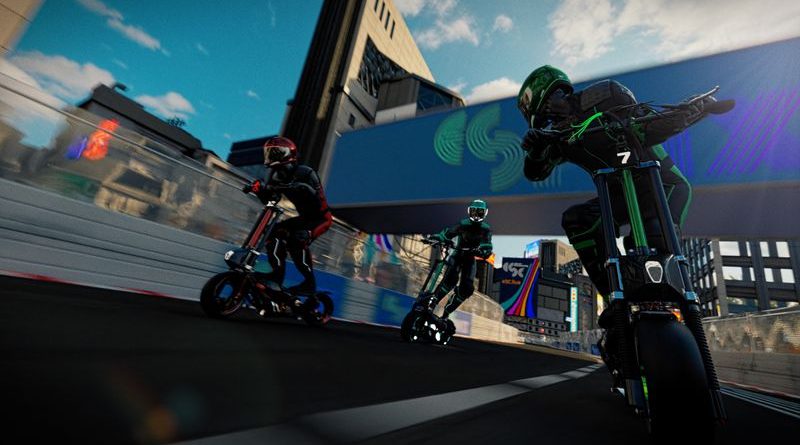
A New Racing Frontier: Formula 1 Driver Takes the Wheel of an Electric Scooter in Groundbreaking Championship
The world of motorsport is witnessing an unprecedented evolution as traditional racing disciplines expand to embrace innovative and environmentally conscious alternatives. In a surprising development that has captured the attention of racing enthusiasts worldwide, a Formula 1 driver has been spotted taking control of an electric scooter, signaling the emergence of a completely new competitive racing format that promises to revolutionize urban mobility sports.
The newly announced electric scooter racing championship is scheduled to launch in 2021, featuring high-performance vehicles capable of reaching speeds up to 100 kilometers per hour. Unlike traditional motorsport events held on purpose-built circuits, these races will take place directly within the urban infrastructure of several major cities around the globe, transforming familiar streets into competitive racing venues.
This innovative racing series represents a significant departure from conventional motorsport formats and reflects the growing global trend toward sustainable transportation and entertainment. The involvement of established Formula 1 talent lends considerable credibility to the fledgling championship, suggesting that major stakeholders in the motorsport industry see genuine potential in electric micromobility racing. The crossover of professional drivers from elite categories demonstrates that these compact vehicles demand serious skill and offer legitimate competitive challenges despite their diminutive size compared to traditional racing machines.
The concept of urban electric racing builds upon the success of Formula E, the all-electric single-seater championship that has been operating since 2014 and has proven that environmentally friendly motorsport can attract substantial audiences and sponsor investment. However, the scooter racing format takes accessibility to an entirely new level, as the vehicles more closely resemble everyday transportation options that millions of people around the world already use for commuting and leisure activities.
Electric scooters have experienced explosive growth in popularity over the past several years, becoming a ubiquitous presence in major metropolitan areas from Los Angeles to Paris, from Singapore to São Paulo. The global electric scooter market has been valued at billions of dollars, with projections indicating continued rapid expansion as cities invest in infrastructure to support micromobility solutions. By creating a professional racing series around these vehicles, organizers hope to elevate the perception of electric scooters from simple transportation tools to legitimate performance machines capable of delivering excitement and entertainment.
The decision to host races within existing urban infrastructure presents both unique opportunities and significant logistical challenges. City-center courses offer spectacular backdrops and bring the action directly to fans who might never travel to traditional racing circuits, potentially attracting entirely new demographics to motorsport. However, organizers must work closely with local authorities to ensure safety for both competitors and spectators while minimizing disruption to daily city life. The relatively quiet operation of electric vehicles compared to internal combustion engines may actually facilitate the approval process, as noise pollution concerns have historically been a major obstacle for urban racing events.
Technical specifications for the racing scooters remain partially undisclosed, but the 100 km/h top speed indicates that these are far from ordinary consumer models. Professional racing scooters likely feature enhanced battery systems, upgraded motors, improved suspension components, and specialized tires designed for competitive performance on varied urban surfaces. Safety equipment requirements for riders will presumably be comprehensive, potentially including full-face helmets, protective suits, and advanced impact protection systems similar to those used in motorcycle racing disciplines.
The emergence of electric scooter racing also carries broader implications for the future of urban transportation and environmental sustainability. As cities worldwide implement policies to reduce carbon emissions and combat climate change, showcasing the performance capabilities of electric micromobility vehicles through competitive racing could accelerate public adoption and acceptance. The championship may serve as both entertainment and advocacy, demonstrating that sustainable transportation solutions need not sacrifice excitement or performance in the pursuit of environmental responsibility.