
Lockheed Martin Opens New Facility to Manufacture Next-Generation Interceptor Missiles
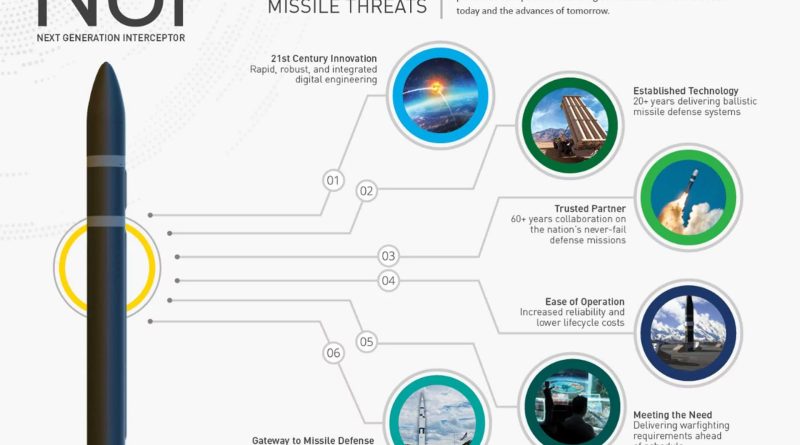
Defense giant Lockheed Martin has officially inaugurated a new manufacturing facility dedicated to producing the Next Generation Interceptor (NGI), a cutting-edge missile defense system designed to protect the United States from ballistic missile threats. The expansion marks a significant milestone in America’s ongoing efforts to modernize its homeland defense capabilities against increasingly sophisticated intercontinental ballistic missile (ICBM) threats from adversarial nations.
The new production facility represents a substantial investment in the nation’s defense industrial base and demonstrates the Pentagon’s commitment to advancing missile defense technology. The NGI program is intended to replace the aging Ground-based Midcourse Defense (GMD) system’s interceptors, which have been the backbone of U.S. homeland missile defense since the early 2000s. Military officials have long expressed concerns about the reliability and effectiveness of the current interceptor fleet against modern missile threats.
The Next Generation Interceptor program emerged from the Missile Defense Agency’s recognition that potential adversaries, particularly North Korea, have made significant advancements in their ballistic missile capabilities over the past decade. North Korea has conducted numerous ICBM tests, demonstrating missiles theoretically capable of reaching the continental United States. Additionally, concerns about Chinese and Russian nuclear modernization programs have added urgency to the development of more capable defensive systems. The NGI is designed to address these evolving threats with improved speed, accuracy, and the ability to counter countermeasures that adversaries might employ to defeat interceptors.
Lockheed Martin secured the NGI development contract in 2021, beating out competitor Northrop Grumman in a highly contested bidding process. The contract, valued at potentially tens of billions of dollars over its lifetime, represents one of the most significant missile defense awards in recent history. The company has assembled a team of subcontractors including Aerojet Rocketdyne for propulsion systems and other specialized defense firms to deliver a comprehensive interceptor solution. The new manufacturing facility will employ hundreds of skilled workers, including engineers, technicians, and quality assurance specialists, contributing to local economic growth while advancing national security objectives.
The technical specifications of the NGI remain largely classified, but defense analysts understand that the system will feature a multi-object kill vehicle capable of engaging multiple warheads or decoys in a single intercept attempt. This capability addresses one of the primary limitations of current interceptors, which require a one-to-one engagement ratio with incoming threats. The improved kill vehicle will utilize advanced sensors and guidance systems to discriminate between actual warheads and decoys in the harsh environment of space, where midcourse intercepts occur at altitudes above the Earth’s atmosphere.
The Ground-based Midcourse Defense system currently consists of 44 interceptors deployed at Fort Greely in Alaska and Vandenberg Space Force Base in California. These strategic locations provide optimal coverage for threats approaching from North Korea and other potential launch points. The NGI missiles will eventually augment and replace these existing interceptors, though the transition is expected to take several years as production ramps up and extensive testing validates the new system’s performance. The Missile Defense Agency plans to conduct rigorous flight tests before declaring the NGI operationally deployable.
Critics of missile defense spending argue that such systems are enormously expensive and may never achieve the reliability necessary to guarantee protection against a determined nuclear attack. Historical tests of missile defense interceptors have shown mixed results, with some high-profile failures raising questions about the technology’s maturity. However, proponents counter that even imperfect defenses provide valuable strategic benefits by complicating adversary attack planning and potentially reducing the damage from a limited strike. The opening of Lockheed Martin’s new facility signals that the U.S. government remains firmly committed to missile defense as a pillar of national security strategy, regardless of ongoing debates about its ultimate effectiveness.
As geopolitical tensions continue and missile proliferation concerns grow worldwide, the NGI program represents America’s technological response to 21st-century ballistic threats. The new Lockheed Martin facility will serve as the industrial foundation for this critical defense capability for decades to come, ensuring that the United States maintains the ability to defend its homeland against the most dangerous weapons ever devised.