
Ukraine’s Defense Industry Seeks Export Markets as State Unable to Absorb Full Production Capacity
Ukraine’s burgeoning defense industry has reached a critical juncture where domestic state procurement can no longer absorb the full volume of military equipment and weapons being produced by national manufacturers. According to representatives from the Association of Defense Industries of Ukraine (known by its Ukrainian acronym TSU), this situation is pushing companies to seek authorization for exports to foreign markets as a means of sustaining their operations and generating additional revenue streams essential for continued growth and innovation.
The defense sector in Ukraine has experienced unprecedented expansion since the full-scale Russian invasion began in February 2022. What was once a relatively modest industry has transformed into a rapidly growing ecosystem of manufacturers producing everything from drones and armored vehicles to ammunition and sophisticated electronic warfare systems. This explosive growth was driven by necessity, as Ukraine found itself fighting one of the largest conventional wars in Europe since World War II and needed to dramatically increase its domestic production capabilities to supplement Western military aid.
The TSU’s statement highlights a paradox facing the Ukrainian defense industry: while the country remains locked in an existential conflict requiring massive quantities of military hardware, the state budget simply cannot accommodate purchases of everything being manufactured. Ukraine’s defense spending has consumed an enormous portion of government resources, with military expenditures accounting for over 50 percent of the national budget in recent years. Despite this unprecedented allocation, production capacity has outpaced the government’s ability to procure, creating a surplus that manufacturers need to monetize through alternative channels.
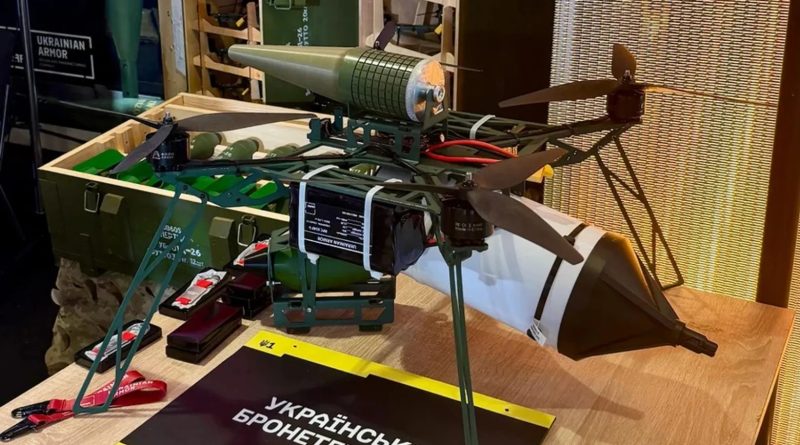
Exporting defense products would provide Ukrainian companies with crucial additional funding that could be reinvested into research and development, expanded production facilities, and workforce training. This financial injection would ultimately benefit Ukraine’s own military by enabling manufacturers to improve their products and scale up operations more rapidly. Several Ukrainian defense companies have already gained international recognition for innovative products, particularly in the drone and unmanned systems sector, where Ukrainian engineers have developed cutting-edge solutions battle-tested in real combat conditions.
The international market for defense products has shown considerable interest in Ukrainian-made weapons systems, particularly given their proven effectiveness on the modern battlefield. Countries observing the conflict have taken note of how certain Ukrainian innovations have performed against Russian forces, making these systems attractive options for nations looking to modernize their own arsenals. Ukrainian-made drones, counter-drone systems, and various types of munitions have demonstrated remarkable effectiveness, essentially serving as live demonstrations of their capabilities to potential foreign buyers.
However, navigating the international arms trade presents significant challenges for Ukrainian manufacturers. Export controls, licensing requirements, and geopolitical considerations all play roles in determining which products can be sold and to which countries. Additionally, Ukraine must balance the desire to generate export revenue against its own pressing military needs, ensuring that foreign sales do not compromise the supply of critical equipment to Ukrainian forces on the front lines. The government has been working to establish frameworks that would allow for controlled exports while maintaining priority fulfillment of domestic military orders.
Historical context provides important perspective on Ukraine’s defense industry evolution. Prior to 2014, Ukraine possessed significant defense manufacturing capabilities inherited from the Soviet era, including facilities that produced tanks, aircraft, and missiles. However, the industry was largely oriented toward Russian supply chains and markets. The conflict that began in 2014 forced a fundamental restructuring, and the full-scale invasion in 2022 accelerated this transformation dramatically. Today’s Ukrainian defense sector is increasingly innovative, agile, and oriented toward Western standards and partnerships. The push for export markets represents the next phase in this evolution, potentially establishing Ukraine as a significant player in the global defense industry while simultaneously strengthening its own military capabilities through the economic benefits such trade would generate.